How Your Rooms Will Sound
Sound behaves in a room rather like light does. A soft covering absorbs it and a hard one sends it back, so voices carry further, footsteps register, and the television sounds different to you in the evening. In a house with high ceilings and very little soft furnishing you notice it. In a smaller room with couches and curtains in it you may not notice anything at all. Working out which of those your rooms are is worth five minutes before you commit, because the answer changes what you might want to do about it.
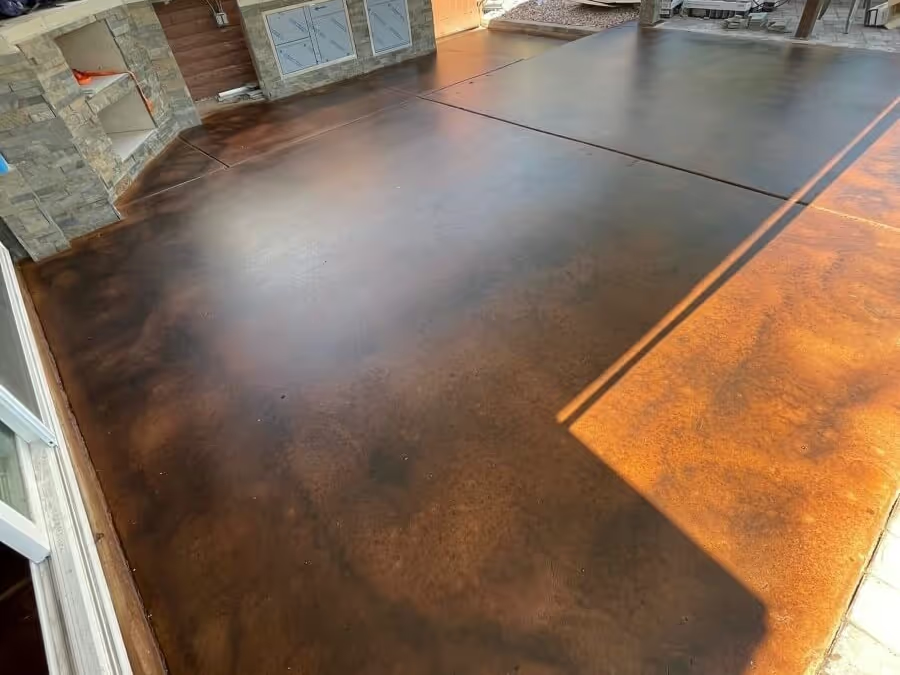
The fixes are ordinary and you probably own most of them already. A rug where people sit, curtains rather than blinds on your biggest window, and something soft on a long blank wall will take the edge off a room without touching the floor at all. Felt pads under the chairs deal with the scraping that annoys people most. None of it is a compromise: you keep a surface that looks the way you wanted and cleans in minutes, and you spend an afternoon arranging the room around it. That hardness is what makes it so easy to live with: here is the build behind that hard surface.