What Moisture Does to a Coating
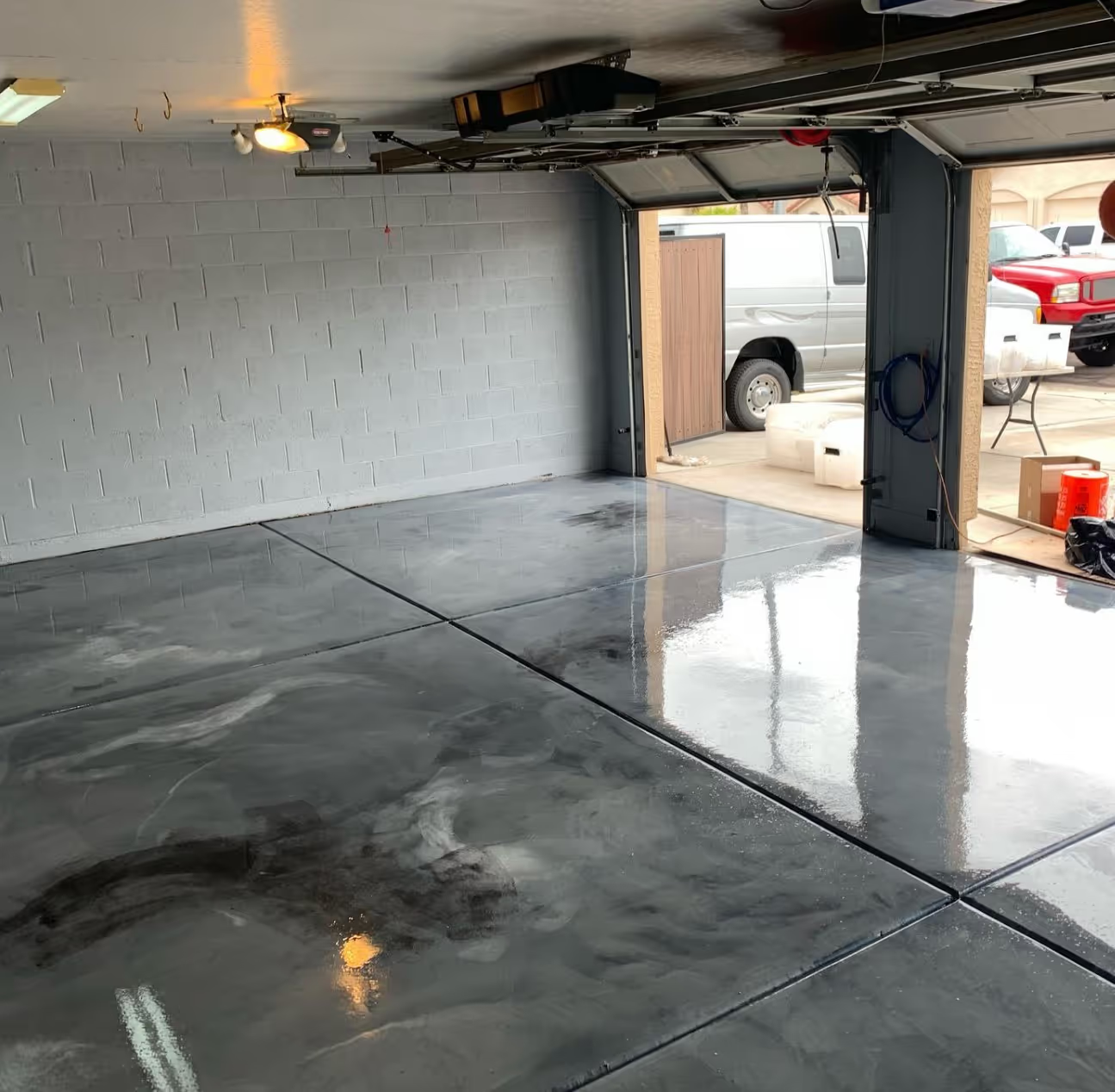
Concrete on grade is connected to the ground underneath it. Where there is no vapor barrier, water moves up through the slab as vapor and has to go somewhere when it reaches the surface. A coating bonded across that surface becomes the lid on it. The result shows up weeks or months later as blisters, or as patches that let go cleanly with perfectly good concrete underneath them. It is not a bonding failure. It is pressure from below, and no amount of extra grinding prevents it.
This is why the test comes before the specification rather than after it. We use a relative humidity probe set into the slab, which reads what is happening inside the concrete instead of at the face of it. A surface test can read low on a floor that is wet two inches down, which is exactly the case worth catching. The number that comes back tells us whether your floor takes an ordinary build or needs a moisture tolerant primer under it, and that is a decision worth making from evidence. What sits on top of the primer does not change: here is the standard epoxy floor build we work to.