Thank you! Your submission has been received!
Oops! Something went wrong while submitting the form.


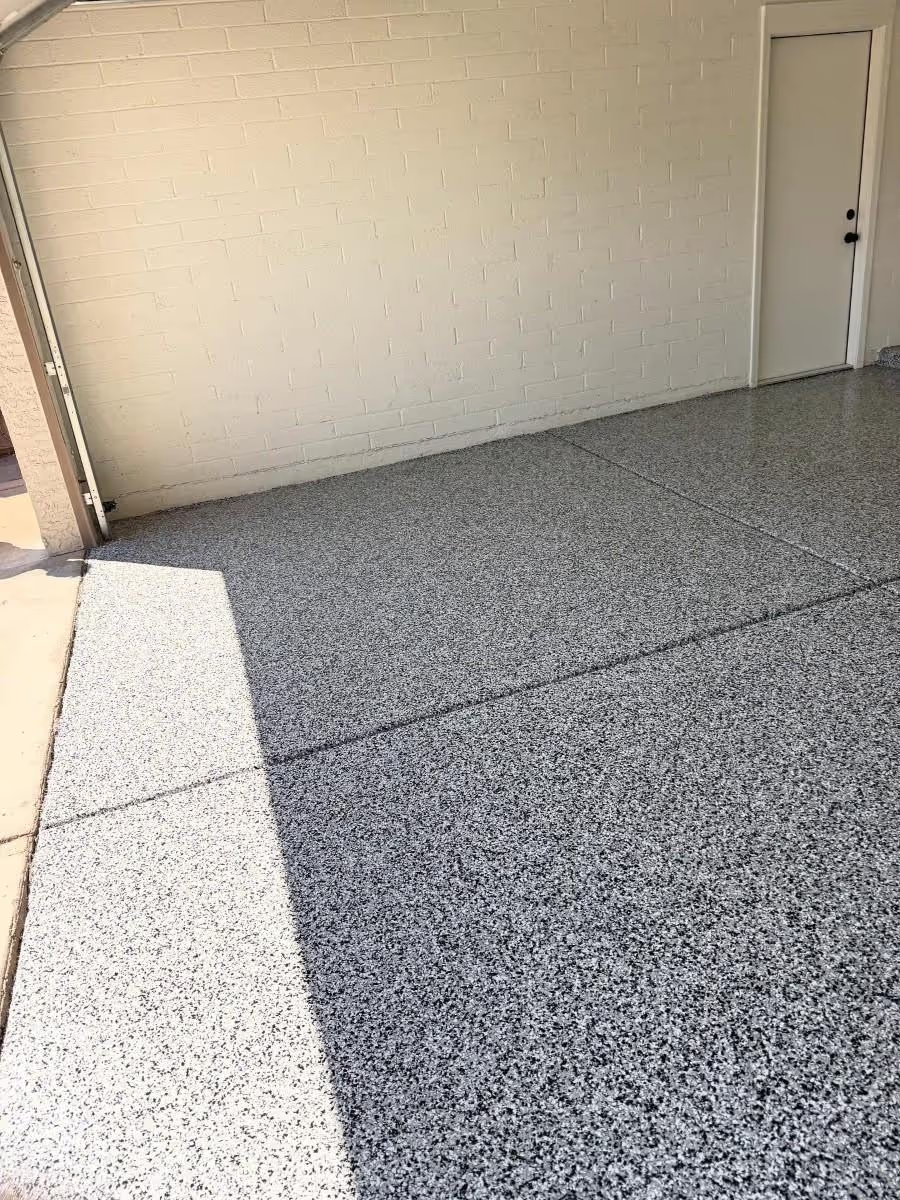
If half your patio sits under the roof and the other half bakes in the open, you have the most familiar outdoor slab in the West Valley and the one that is hardest to finish evenly. The two halves age at completely different rates, and the point of coating it is to stop them drifting apart, so the whole thing still reads as one floor in several summers rather than one. Every Glendale patio like this gets UV stable polyaspartic across both halves, not only the exposed one. ROC 358358, and we are licensed, bonded and insured.
Call (602) 820-7739The instinct is to treat the shaded section as the simpler one, and it tends to be the opposite. Concrete under a patio roof stays damp for longer after you hose it down, holds whatever the planters leak onto it, and often carries an older sealer that somebody once put on the part people actually looked at. So the preparation there is usually heavier rather than lighter, and it is the half that decides how long the floor as a whole lasts. Leave it out and you get a surface that fails from the shade outward, which is nowhere anyone thinks to check.
The exposed half has the opposite problem, and that one you can see coming. Direct sun is what ambers and chalks an epoxy topcoat within a season or two, and once it has, no amount of cleaning brings the color back. That is why what goes on top out here is polyaspartic and UV stable rather than epoxy, and why we do not vary it according to which part of the slab happens to be covered. You want the shaded half and the sunlit half to still match in three summers, and running one system across both is what gets you there. We explain what UV stable actually means outdoors on our Phoenix page.

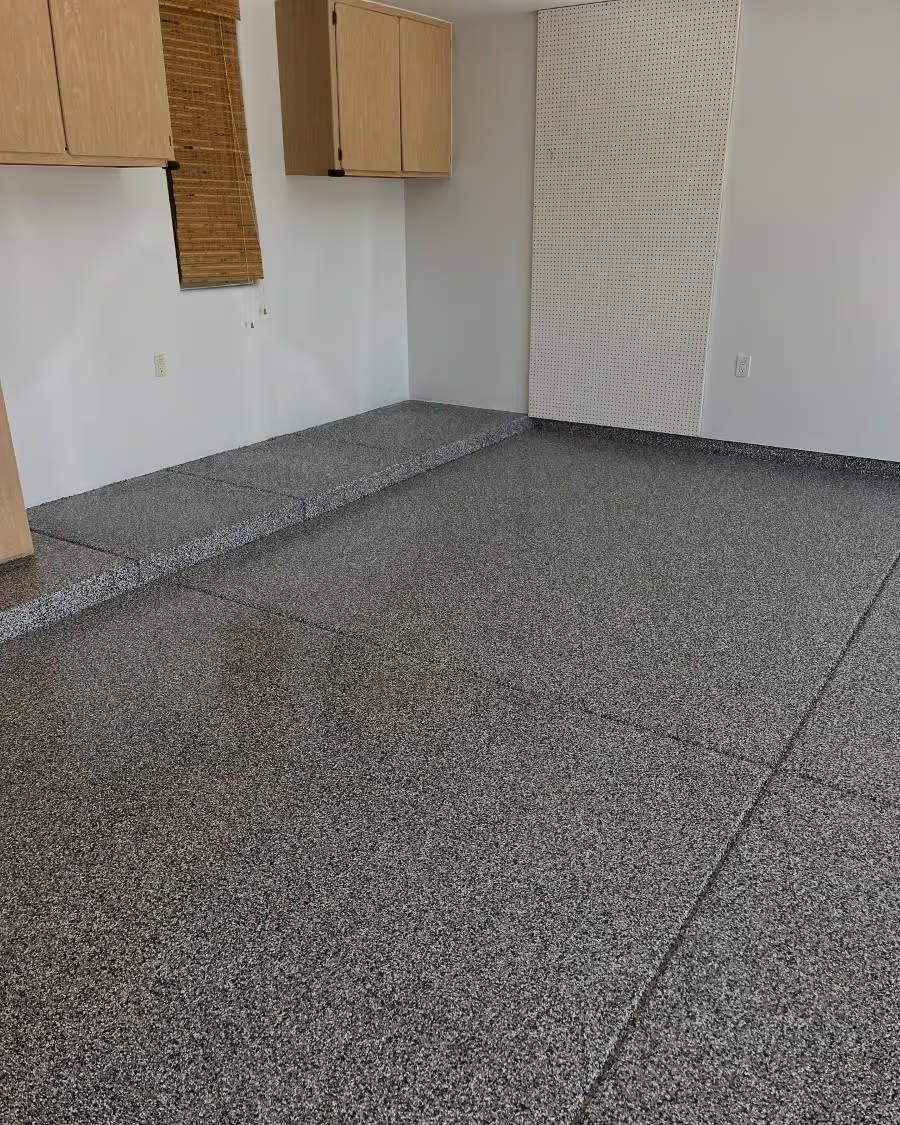
Color reads differently in shade than it does in full sun, and a shade chosen indoors will surprise you outside. So we bring samples and lay them on your own slab, in both halves, at the hour of day you actually use the space. A lighter color stays cooler underfoot, which is what you care about on the exposed side in July, and a lightly textured finish keeps the footing safe where rain blows in under the edge of the roof. Those two choices decide whether you enjoy the patio, and you make both of them before we start. Call (602) 820-7739 or fill in the quote form and we will bring the samples out to you.
Three stages on every exterior concrete coating in Glendale, AZ, and the first one decides the other two.
We mechanically grind, profile and vacuum the concrete with diamond tooling, which takes off the weathered top layer along with any old sealer. Exterior slabs almost always carry one, and a coating laid over an existing sealer has nothing to bond to. That preparation runs under every interior floor we lay: the four layers of an epoxy floor build, in order.
Cracks, spalled edges and pitted areas are cut out, filled and ground flush. Control joints are honored rather than filled over, so the slab can still move where it was designed to move instead of cracking somewhere new.
Then the system itself: a polyaspartic base, the color layer, and two coats of UV stable polyaspartic over the top, with anti-slip aggregate broadcast in where it was specified. A polyaspartic build goes down in a day, which on a driveway is the difference between one afternoon without the car and a week of it.
If you want to protect your concrete floor from damage, improve safety, and keep your space looking its best, give us a call or fill in our FREE quote form.

Phoenix, Peoria, Scottsdale, Mesa, Gilbert, Tempe, Glendale, Chandler, Queen Creek, Ahwatukee, San Tan Valley, Maricopa, Avondale, Paradise Valley, Tolleson, Wickenburg, Gold Canyon, Goodyear, New River, Prescott, Fountain Hills, Desert Ridge, Sedona, Surprise, Litchfield Park, Cave Creek, Apache Junction, Buckeye and the rest of Arizona.